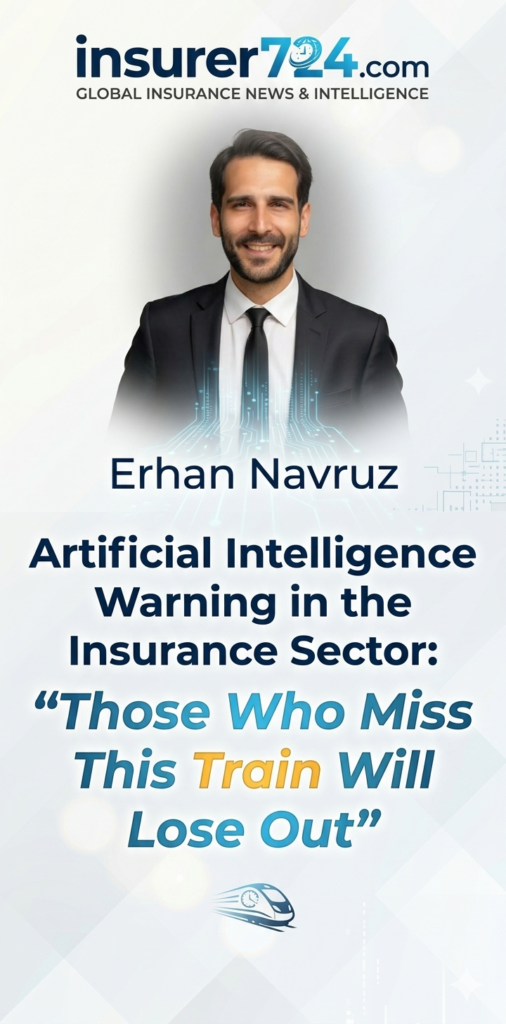

In recent years, the same concepts have come to the fore at almost every event we have attended in the insurance sector: artificial intelligence, digital transformation, data analytics, automation and insurtech.
Undoubtedly, all of these are extremely important for our sector. Everyone now agrees that artificial intelligence is no longer a choice but an inevitable reality in insurance. From claims management to pricing, and from customer service to risk analysis, many processes are being reshaped by technology.
However, it is precisely at this point that we need to ask an important question:
Could we be overlooking local dynamics whilst discussing technology and artificial intelligence?
In my view, the answer to this question is partly yes.
This is because, in recent times, we have largely assessed the insurance sector through the lens of motor and comprehensive insurance. Yet the sector is not limited to just these two products. Customer expectations vary significantly across many other sectors, such as health insurance, supplementary health insurance, life insurance, and home and business premises insurance.
Insurance Is Not Just About Technology; It Is Also About Trust
Artificial intelligence can accelerate processes, reduce costs and enhance the customer experience. However, insurance is not merely a technical process.
Particularly with products like health insurance, customers do not simply want to see a price. They want to understand the policy’s coverage, learn about the specific terms and find a solution that suits them. Most importantly, they look for a contact person they can ask questions of.
Because people do not want to leave decisions concerning their health, their families and their futures entirely to algorithms.
The Reality in Turkey Is Different
Although digitalisation is at a very advanced stage in America and Europe, human consultancy still plays a major role in critical products such as health and life insurance.
In Turkey, however, this need is much stronger.
In our culture, the relationship of trust is decisive. People visit the same doctor, the same shopkeeper and the same insurance agent for years. In the event of a claim, the first place the policyholder calls is often not the insurance company, but the agent they trust.
Because in the insurance industry, the relationship of trust is still built through people.
Artificial Intelligence Is Not the Agent’s Rival
From time to time, comments are made suggesting that artificial intelligence will replace agents. However, the reality is quite different.
Artificial intelligence can prepare quotes, analyse data and speed up processes. But it cannot empathise, cannot sense the customer’s concerns and cannot interpret their complex needs.
For this reason, the future of insurance should not be built on the debate of “people or technology?”, but rather on the question of “how can people and technology work together more effectively?”.
The Human Factor Is Even More Critical in Health Insurance
In the coming years, health insurance will be one of the fastest-growing sectors in the Turkish insurance industry.
Rising healthcare costs and demand for private healthcare services are driving this growth. However, health insurance is also one of the product categories where customers have the greatest need for advice.
For this reason, focusing solely on digital sales models will not be sufficient. Companies and agents that utilise technology whilst maintaining human contact will gain a competitive edge.
The Future Lies in a Hybrid Model
The future of insurance will not be entirely digital or entirely traditional.
Artificial intelligence will prepare quotes, analyse risks, speed up claims processes and detect fraud.
However, it is people who will build trust.
It is people who will provide advice.
In times of crisis, it is people who will be there for the customer.
Especially in markets like Turkey, where relationships are strong, this reality will remain unchanged for many years to come.
Consequently, our sector must continue to invest in technology and artificial intelligence. However, whilst doing so, it must not overlook local dynamics, customer habits, and sectors where human contact is critical.
Because in insurance, technology can accelerate trust.
But trust itself is still built by people.