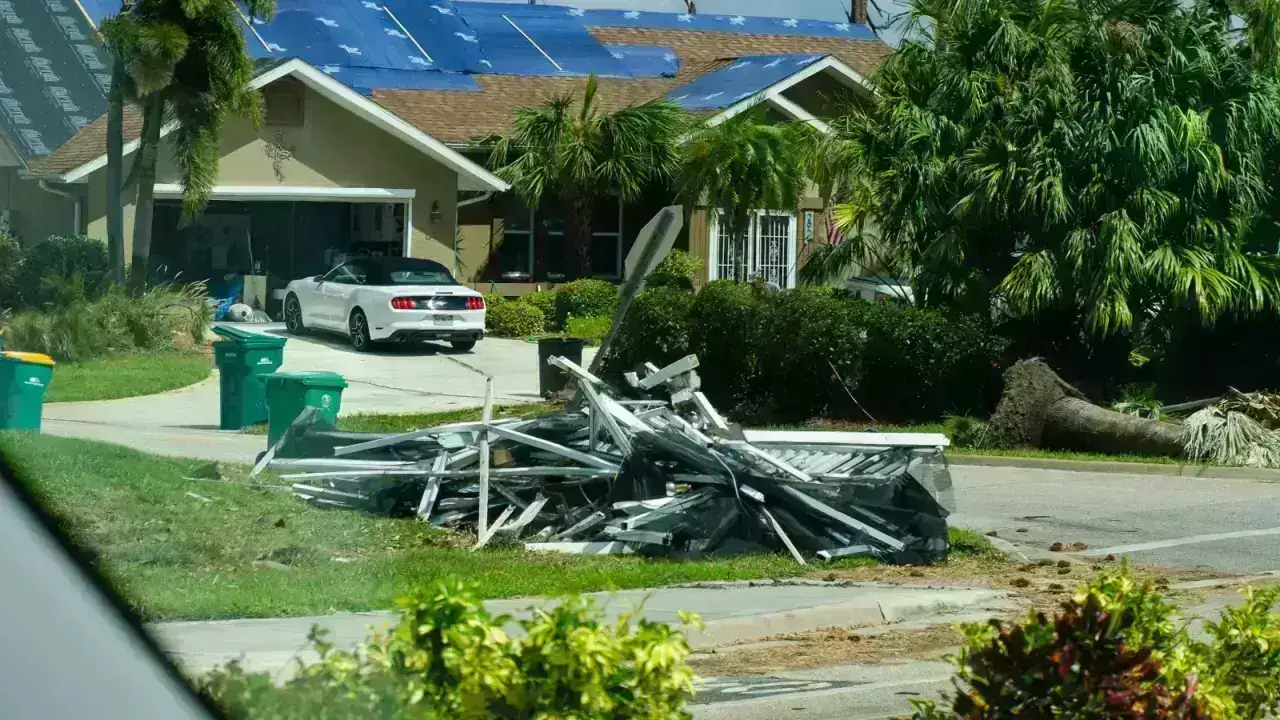
Homeowners often focus on the premium and the main deductible shown on the declarations page. In coastal and storm-exposed areas, however, a policy may contain a second deductible that applies only when certain wind or storm conditions are met. The exact trigger, percentage and state rules can vary materially.
The National Association of Insurance Commissioners (NAIC) explains that hurricane and named-storm deductibles were developed as a risk-sharing mechanism. They may be expressed as a fixed amount, but percentage deductibles are common in areas with significant hurricane or wind exposure.
Standard deductible vs. hurricane or named-storm deductible
| Deductible type | Common structure | When it may apply |
|---|---|---|
| Standard homeowners deductible | Often a fixed dollar amount | Many ordinary covered losses such as theft or fire, subject to the policy |
| Hurricane deductible | Often a percentage of the insured dwelling amount | Damage tied to a hurricane under the policy and applicable state definition |
| Named-storm deductible | Often percentage-based | May apply to hurricanes, tropical storms or other named weather systems as defined by the contract |
| Wind/hail deductible | Dollar or percentage amount | Wind or hail losses, potentially including non-hurricane events |
How a percentage deductible is calculated
A percentage deductible is generally calculated from the policy’s insured dwelling amount, not from the size of the claim. If a home is insured for $400,000 and the applicable storm deductible is 2%, the homeowner’s deductible would be $8,000. With a 5% deductible, it would be $20,000.
This is why the percentage can look deceptively small. A homeowner who could comfortably pay a $1,500 standard deductible may not be prepared for a five-figure storm deductible.
What triggers the special deductible?
There is no single nationwide trigger. Policy wording and state law determine when a hurricane, named-storm or wind/hail deductible begins and ends. Some frameworks refer to official storm classifications or warnings; others use different definitions. The declarations page, deductible endorsement and state-specific notices should be read together.
Five questions to ask before hurricane season
- Which storm deductible is on the policy? Hurricane, named storm, wind/hail, or more than one?
- Is it a percentage or fixed dollar amount? Convert any percentage into a real dollar figure.
- What amount is the percentage applied to? Usually the dwelling limit, but verify the contract.
- What event triggers it? Do not assume every windy day or every tropical system is treated the same.
- Can the household fund the deductible? Emergency savings should reflect the largest realistic deductible exposure.
Does flood damage use the same deductible?
No. Flood is generally a separate insurance issue. A standard homeowners policy usually does not cover flood as defined by the policy, and a hurricane deductible does not convert excluded flood damage into covered damage. A single storm can produce both wind damage and flooding, potentially involving different policies and deductibles.
Can a higher storm deductible reduce premium?
Possibly, because the policyholder is retaining more risk. But the premium savings should be weighed against the amount you would have to pay after a major loss. The cheapest deductible is not automatically the best financial choice.
Frequently asked questions
Is a 2% hurricane deductible equal to 2% of the claim?
Usually no. Percentage deductibles are commonly based on the insured dwelling value or another policy amount, not the claim amount. Confirm the exact wording.
Can my standard deductible and storm deductible both apply?
The answer depends on the loss and policy language. Ask the insurer or producer how competing deductibles are handled under your specific contract.
Are hurricane deductibles the same in every state?
No. State laws, permitted forms, disclosures and triggers differ.
Should I review the deductible when my dwelling limit changes?
Yes. If a percentage deductible is tied to the dwelling limit, a higher insured value can increase the deductible in dollars.
Sources & further reading
Reviewed October 2, 2026. Deductible rules and storm triggers vary by state, insurer and policy form; use the declarations page and endorsements for the controlling terms.