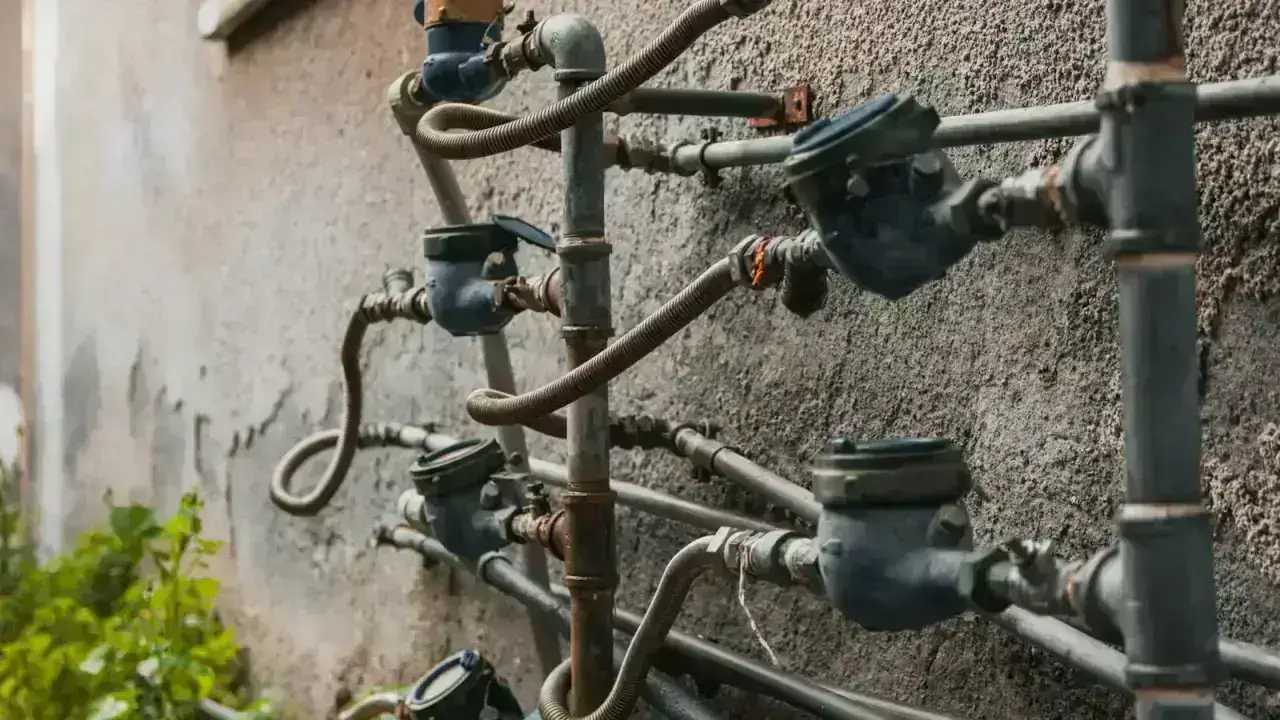
A broken underground pipe can be expensive because the visible leak may be only a small part of the loss. Excavation, locating the damaged section, replacing a line, restoring a driveway or landscaping and reconnecting the service can all add cost. Standard homeowners policies are designed primarily around damage to the dwelling and covered personal property. They do not automatically turn every worn-out pipe or utility line on the property into an insured loss.
That gap is why some insurers offer a service line, buried utility line or similarly named endorsement. The National Association of Insurance Commissioners explains that endorsements can add, remove or modify coverage that is not otherwise included in the base contract. A service-line endorsement is one example of this broader concept, but there is no single nationwide policy wording.
What counts as a service line?
The first question is ownership. A utility company may own the main line in the street, while the homeowner may be responsible for the branch running from the public connection to the house. Coverage generally focuses on the portion the insured is legally responsible to repair.
| Line or system | Potential relevance | What to verify |
|---|---|---|
| Water service line | Pipe carrying potable water from the utility connection to the home | Where utility ownership ends and homeowner responsibility begins |
| Sewer or drainage line | Underground piping carrying wastewater away from the property | Whether collapse, root intrusion or wear are covered causes |
| Electrical service | Buried cable serving the residence | Whether the line is homeowner-owned and within the covered premises |
| Communications/data line | Some endorsements may include certain underground communications lines | Definitions, exclusions and whether the provider owns the line |
| Geothermal or other specialty lines | May or may not fall within policy definitions | Exact definition of “service line” in the endorsement |
What can service line coverage pay for?
Policy forms differ, but covered expenses may include direct physical damage to the line, excavation to reach it, repair or replacement of the damaged portion and certain restoration costs after the work is complete. Some forms also address extra costs such as expediting repairs, temporary services or loss of use, while others are narrower.
One current insurer example illustrates why wording matters. Travelers describes a buried-utility-lines endorsement that may respond to causes such as freezing, wear and tear, root invasion and corrosion within that specific product. Those examples should not be assumed to apply to every insurer. The correct question is always: what does my endorsement define as a covered service line and a covered cause of loss?
Service line coverage is not water-backup coverage
These two endorsements are often confused. Water-backup coverage typically addresses damage inside the home caused by water backing up through a sewer or drain or overflowing from a sump system, subject to the policy terms. New York’s Department of Financial Services, for example, explains that some homeowners policies offer a water-backup endorsement for sewer or drain backup and sump pump failure. Service line coverage, by contrast, is aimed at physical damage to the line itself.
A single event can involve both issues. A collapsed sewer lateral could require excavation and line replacement, while sewage also backs up into the basement. Whether both parts are covered can depend on having both endorsements and on the facts of the loss.
Service line coverage is not flood insurance
Flood is generally treated separately from homeowners insurance. A service-line endorsement does not transform flood damage into a covered homeowners loss. Likewise, a flood policy does not necessarily pay to repair a worn, broken or root-damaged private utility line. Separate contracts answer separate questions.
Common limitations to check before buying
- Coverage limit: Find the per-loss or policy-period maximum and ask whether excavation and restoration count inside that same limit.
- Deductible: Service-line endorsements may have a separate deductible from the main homeowners deductible.
- Age or material restrictions: Some forms may treat obsolete, deteriorated or defective materials differently.
- Excluded causes: Earth movement, flood, intentional damage, faulty installation, gradual leakage or other causes may be excluded depending on the form.
- Location: Verify whether coverage applies only on the residence premises and how far the covered line extends.
- Ownership: Damage to utility-company property usually is not the homeowner’s insurable interest to repair.
- Restoration: Ask how the policy values landscaping, paving, concrete or other surfaces disturbed during excavation.
How to decide whether the endorsement is useful
Start with the property rather than the premium. Older neighborhoods may have aging sewer laterals, mature trees or older piping materials. Newer homes can still face line failures, but the probability and repair cost may be different. Ask a plumber or utility where the homeowner’s responsibility begins and whether there are known material or root-intrusion issues.
Then compare the endorsement limit with a realistic excavation-and-repair scenario. A low limit may not go far if a line runs under a driveway, retaining wall or long landscaped area. Conversely, a high limit may be unnecessary for a short, easily accessible service run.
What to do after a suspected underground-line failure
- Protect people and property first; shut off water or electricity if it is safe and appropriate.
- Contact the utility when the problem could involve utility-owned infrastructure or a public main.
- Call the insurer before major excavation when possible and ask whether emergency mitigation can proceed.
- Document the leak, backup, sinkhole, damaged surface and any emergency work with photos and invoices.
- Ask the contractor to identify the failed section, cause of failure and whether the damaged line is homeowner-owned.
- Keep removed sections or detailed photographs if the insurer may need inspection evidence.
- Separate the line-repair invoice from interior water damage or cleanup costs so each coverage question can be evaluated clearly.
Questions to ask your agent
- What exact utility lines are included?
- Does the endorsement cover wear and tear, root invasion, corrosion or mechanical breakdown?
- Is excavation included in the limit?
- How much is available for landscaping, driveway or walkway restoration?
- Is there a waiting period or special deductible?
- Does a claim affect renewal eligibility or loss history under this insurer’s rules?
- How does this endorsement coordinate with water-backup, equipment-breakdown and flood coverage?
Frequently asked questions
Does homeowners insurance automatically cover a broken sewer line?
Not automatically. Coverage depends on the cause of damage, the policy form, ownership of the line and any service-line or water-backup endorsements.
Will service line coverage pay the utility company’s main line?
Usually the focus is property the homeowner is responsible for. Utility-owned mains are generally the utility’s responsibility, but ownership boundaries differ by location.
Does service line coverage pay for a clogged drain?
Routine clogs, maintenance and wear-related problems may not be covered unless the endorsement specifically treats the underlying cause as covered damage. Read the policy wording.
Is tree-root damage covered?
Some products expressly include root invasion; others may not. Do not assume coverage based on the endorsement name alone.
Sources and further reading
Reviewed October 5, 2026. Service-line endorsements are optional and carrier-specific; availability, covered causes, limits and deductibles vary by state and insurer.