A car accident is stressful, and people often forget basic steps. The easiest approach is to separate the process into three stages: the scene, the first 24 hours and the claim follow-up.
At the scene: a practical checklist
- Check for injuries. Call 911 or the local emergency number when anyone may be hurt.
- Get to a safer position if possible. If vehicles can be moved safely and local law permits, move out of active traffic.
- Exchange information. Collect names, contact details, driver’s license information, license plates and insurance company/policy information.
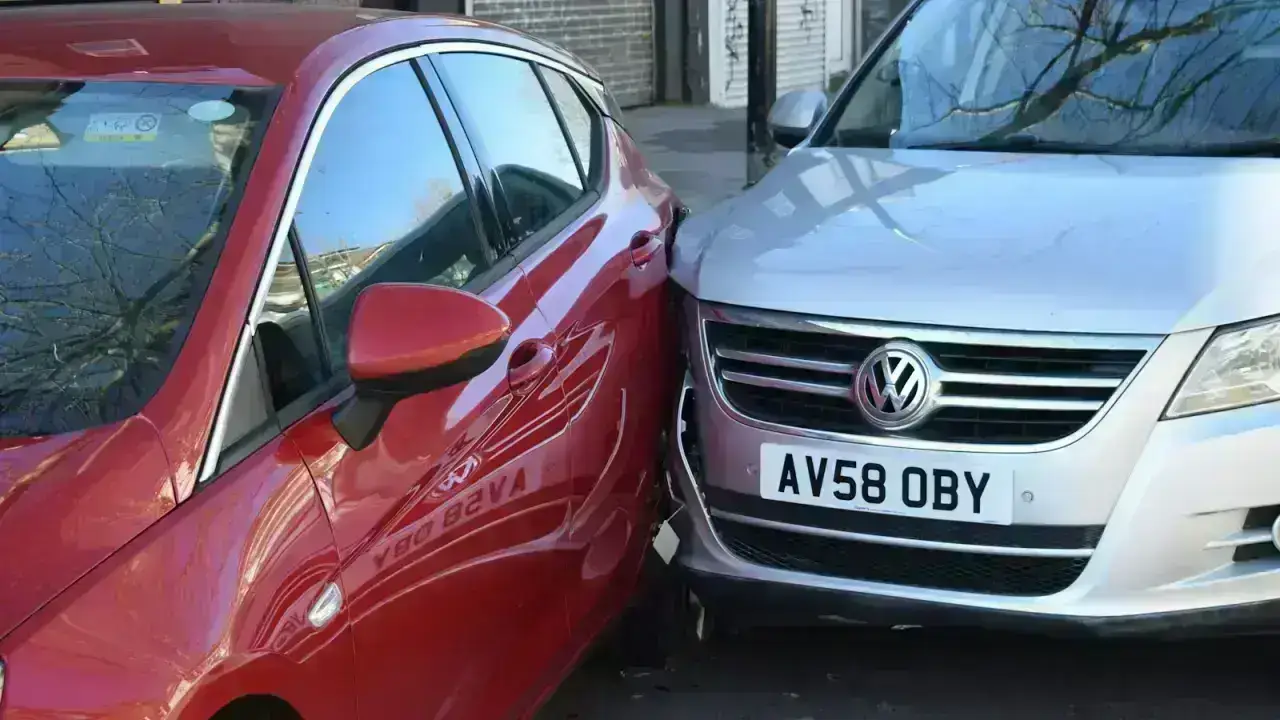
- Document the scene. Take wide and close photos of vehicle positions, damage, road markings, traffic signs, debris, weather and visible injuries when appropriate.
- Identify witnesses. Ask for contact information from independent witnesses.
- Request a police report when required or appropriate. Reporting requirements vary by state and by injury/property-damage thresholds.
Information worth photographing
| Item | Why it helps |
|---|---|
| All sides of every vehicle | Shows impact points and pre-repair condition |
| License plates | Helps identify vehicles correctly |
| Insurance card | Reduces errors when reporting the claim |
| Intersection/roadway | Provides context for lanes, signals and signs |
| Skid marks/debris | Can help reconstruct how the collision occurred |
| Dash warnings or odometer | Can document vehicle condition and mileage |
What to tell your insurer
Report what happened in factual terms: date, time, location, vehicles involved, known injuries, police report number if available and where the vehicle is located. Ask which coverage may apply—collision, liability, rental reimbursement, medical payments, PIP or uninsured/underinsured motorist coverage—without assuming every benefit is on your policy.
The NAIC advises consumers to review policy requirements and cooperate with reasonable claim requests. Deadlines and duties after a loss can vary, so prompt notice is a practical default.
Should you call the other driver’s insurer?
You may be contacted by another insurer, but you are not required to guess about injuries, repair costs or fault. Before giving a recorded statement or signing a broad release, understand what is being requested. If you have your own collision coverage, you can ask your insurer whether using it may speed repairs and how deductible recovery/subrogation might work.
Repair estimate vs. final repair bill
Initial estimates can change after a body shop disassembles the vehicle and discovers hidden damage. Ask how supplements are handled, whether original equipment/manufacturer parts or alternative parts are contemplated under your policy and state law, and whether the insurer has a direct-repair network. In many jurisdictions consumers retain choices, but specific rights vary.
If the car may be a total loss
Ask how the insurer calculates actual cash value, what comparable vehicles were used, how options and condition were considered, and how taxes/fees are treated under state rules. If you have an auto loan, remember that the insurer’s vehicle value and your loan balance are separate numbers. GAP coverage, if you bought it and the contract applies, addresses a different risk.
Keep a claim file
- Claim number and adjuster contact details
- Police report and witness information
- Photos and video
- Tow/storage invoices
- Repair estimates and supplements
- Medical bills and treatment records when relevant
- Rental-car receipts if you have eligible coverage
- Emails, text messages and written claim decisions
Common mistakes to avoid
- Leaving a dangerous scene without arranging emergency help.
- Posting detailed statements about the crash on social media while the claim is unresolved.
- Discarding photos, receipts or damaged personal property too early.
- Assuming a rental car is automatically covered.
- Letting a tow/storage bill grow without asking where the vehicle is being held.
- Signing a final release before you understand what claims it resolves.
Frequently asked questions
Do I have to admit fault at the scene?
No. Be truthful and cooperative, but do not speculate. Fault is determined from facts, applicable law and the claim investigation.
Should I file a claim for a small accident?
Consider policy notice requirements, the possibility of hidden damage or injuries, your deductible and the other party’s involvement. A minor-looking collision can become more complicated later.
Will my premium go up?
Not necessarily. Rating rules, fault, claim history, state law and insurer practices differ.
How long does an auto claim take?
There is no single national timeline. Severity, liability disputes, parts availability, injuries and state claim-handling rules can all affect timing.
Sources and review notes
- National Association of Insurance Commissioners (NAIC), What You Should Know About Filing an Auto Claim.
- Your state department of motor vehicles and department of insurance for crash-reporting and claim-handling requirements.
Reviewed October 3, 2026. This guide is general U.S. consumer information; state traffic, fault and insurance rules vary.