
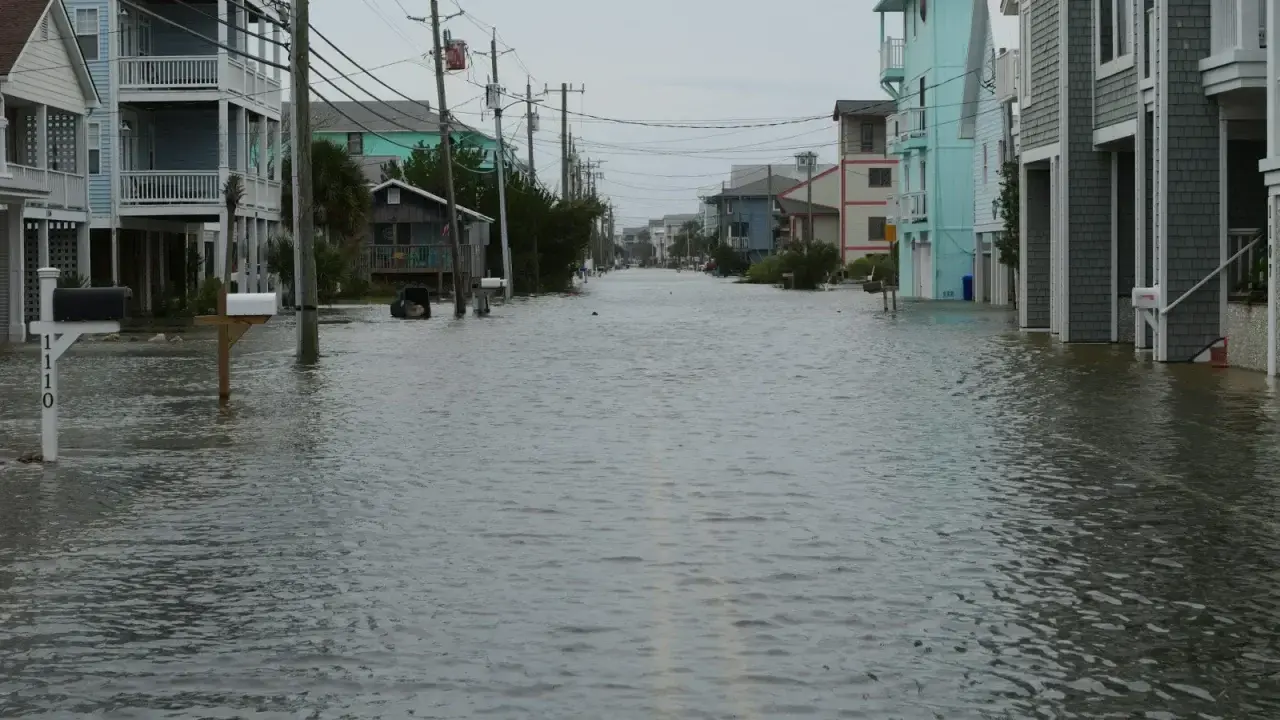
Flood insurance becomes urgent only after many households discover the gap the hard way. Water from a burst pipe may be handled under a homeowners policy, while rising water that enters the property from outside can fall under a flood exclusion. The cause of the water matters.
The NAIC’s flood insurance guidance states that damage from flood is not covered under a standard homeowners policy. The federally backed NFIP offers flood coverage to homeowners, renters and businesses in participating communities, while a private flood insurance market also exists.
What counts as flood insurance?
Flood insurance is designed for direct physical loss caused by flooding as defined by the applicable policy. That definition is important. A policyholder should not assume that every kind of water damage is treated as a flood, or that every water event excluded by homeowners insurance is automatically covered by a flood policy.
NFIP and private flood insurance: the core differences
| Feature | NFIP | Private flood insurance |
|---|---|---|
| Provider | Federal program, sold through participating insurers/agents | Private insurance companies |
| Availability | Linked to participating communities and program rules | Depends on insurer appetite and location |
| Coverage design | Standardized program terms and limits | Can vary materially by carrier |
| Waiting period | A standard waiting period generally applies, subject to exceptions | Varies by company and policy |
| Pricing | Set under NFIP rating methodology | Insurer-specific underwriting and rating |
Why a homeowner might consider the NFIP
The NFIP offers a widely available baseline in participating communities and uses standardized policy forms. It can be especially important where mortgage requirements call for flood coverage. Because the policy structure is defined by the program, comparison is less about choosing among dozens of custom endorsements and more about understanding the program’s coverage, limits, deductibles and property eligibility.
Why a homeowner might consider private flood insurance
Private carriers may offer higher limits, different deductibles, broader options or additional features in some markets. They may also decline a risk or price it differently based on the property’s location and characteristics. The existence of a private option therefore does not mean it is automatically broader or cheaper; the contract needs to be compared line by line.
Questions to ask before choosing a flood policy
- What building and contents limits are available?
- Are basement property and below-grade areas restricted?
- What deductible applies to the building and to contents?
- Is temporary living expense included, limited or excluded?
- How long is the waiting period before coverage takes effect?
- Does the lender accept the policy form?
- How are replacement cost and actual cash value handled?
Do you need flood insurance outside a high-risk zone?
A flood map is useful, but it is not a guarantee that a property outside a mapped high-risk area cannot flood. Drainage failures, intense rainfall, coastal surge, river overflow, wildfire-related runoff and development can change local exposure. The practical question is not only whether insurance is mandatory, but whether the household could absorb a severe flood loss without insurance.
Do not wait for a storm forecast
Flood policies can have waiting periods. The NFIP generally applies a 30-day waiting period for new coverage, with specific exceptions. Private policies can use different waiting rules. Buying only when a hurricane or major rain event is already approaching may therefore be too late.
Frequently asked questions
Does homeowners insurance cover flood?
Standard homeowners policies generally exclude flood. Separate flood coverage is usually required.
Is NFIP the only source of flood insurance?
No. Private flood insurance is available in many markets, although availability and terms vary by insurer and location.
Can renters buy flood insurance?
Yes. Flood coverage can be relevant to renters for personal property even when they do not insure the building itself.
Sources & further reading
Coverage definitions, waiting periods and lender requirements should be checked against the actual policy and current program rules.