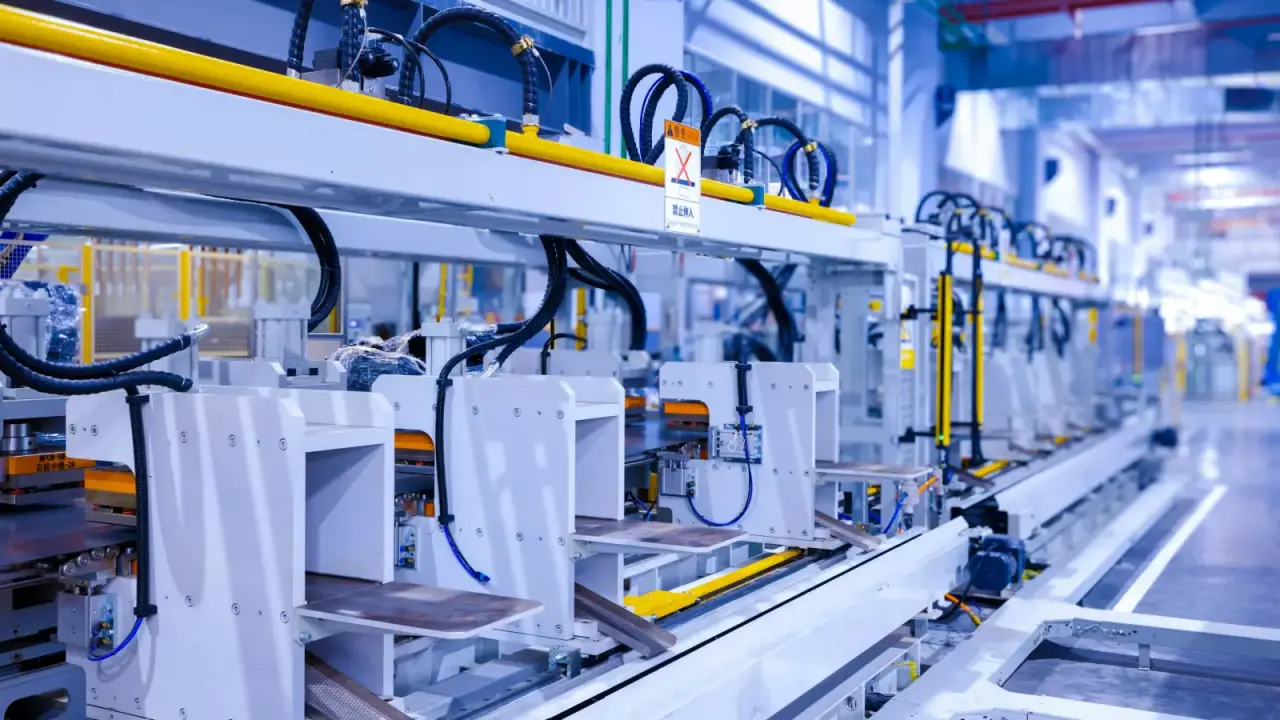
Businesses increasingly depend on equipment that does not have to burn, be stolen or be hit by a storm to create a major loss. An electrical arc can destroy a switchboard, a compressor can fail, a boiler can suffer a pressure accident, or a control system can stop a production line.
Why commercial property insurance may not be enough
Commercial property policies protect buildings and business personal property against covered external causes of loss, but mechanical breakdown, electrical arcing and pressure-system accidents can be treated differently. Travelers describes equipment breakdown as coverage for equipment that transmits, distributes or uses mechanical or electrical energy and notes that property owners can otherwise have gaps for property and business-income losses caused by breakdown events.
What types of equipment can be covered?
Common examples include:
- Boilers and pressure vessels
- Air-conditioning, refrigeration and chiller systems
- Electrical panels, transformers, motors and switchgear
- Manufacturing and production machinery
- Computer, communications and data systems
- Elevators and building-service equipment where eligible
- Diagnostic, laboratory or specialized electronic equipment
The policy definition of covered equipment is critical. Some items, components or failure mechanisms may be excluded.
What is a covered breakdown?
Equipment-breakdown forms commonly focus on sudden and accidental physical loss caused by events such as mechanical failure, electrical failure or pressure-system failure. They are not maintenance contracts. Gradual wear, corrosion, deterioration and a known need for repair are typically not transformed into insured losses simply because equipment eventually stops working.
| Scenario | Possible insurance response |
|---|---|
| Electrical arcing damages a switchboard | Equipment breakdown may respond, subject to wording |
| Compressor suddenly suffers mechanical failure | May fall within equipment-breakdown coverage |
| Fire damages machinery | Commercial property coverage may be primary, depending on cause |
| Machine gradually wears out | Ordinary wear and maintenance are generally not covered |
| Production stops after covered breakdown | Business-income coverage may apply if included and conditions are met |
Business income and extra expense
The physical repair bill may be smaller than the lost revenue from downtime. Equipment-breakdown policies can be structured to include business-income and extra-expense protection when a covered breakdown interrupts operations. Waiting periods, limits and the method used to calculate lost income matter.
Spoilage and contamination
Restaurants, food manufacturers, pharmacies and temperature-sensitive operations can face spoilage after refrigeration or electrical failure. Some equipment-breakdown forms provide spoilage or contamination coverage, but it may be subject to separate sublimits or conditions.
Utility and off-premises equipment
A breakdown at a utility or service provider can interrupt electricity, communications or other critical services even when the business’s own equipment is intact. Some policies offer service-interruption or utility-related extensions. These are not automatic in every form and can be limited by distance, type of service or waiting period.
Equipment breakdown vs. warranty or maintenance agreement
A manufacturer warranty or service contract usually addresses defects, repairs or maintenance under contractual terms. Equipment breakdown insurance addresses insured loss. One should not be assumed to replace the other.
How to compare equipment-breakdown coverage
- Create an inventory of mission-critical mechanical and electrical equipment.
- Identify the maximum realistic repair and replacement cost.
- Estimate lost income if each system is unavailable for several days or weeks.
- Review business-income waiting periods and limits.
- Check spoilage, data-restoration and service-interruption extensions.
- Understand exclusions for wear, corrosion, maintenance and software issues.
- Coordinate the coverage with commercial property, cyber and business-income policies.
Frequently asked questions
Is equipment breakdown the same as boiler and machinery insurance?
Boiler and machinery is the traditional name. Modern equipment-breakdown coverage is broader and can address many mechanical, electrical and electronic systems.
Does it cover old equipment?
Age alone does not answer the question. Eligibility, valuation and the cause of breakdown matter, while ordinary wear and deterioration are generally excluded.
Can a small business need this coverage?
Yes. A small business can depend on refrigeration, HVAC, electrical panels, computers or specialized equipment whose failure would interrupt operations.
Does it pay for preventive maintenance?
Insurance generally does not replace routine maintenance. Some insurers provide risk-control or inspection services separately.
Sources & further reading
Reviewed October 2, 2026. Equipment-breakdown forms vary by insurer; definitions, covered causes, property limits, waiting periods and business-income terms control coverage.