
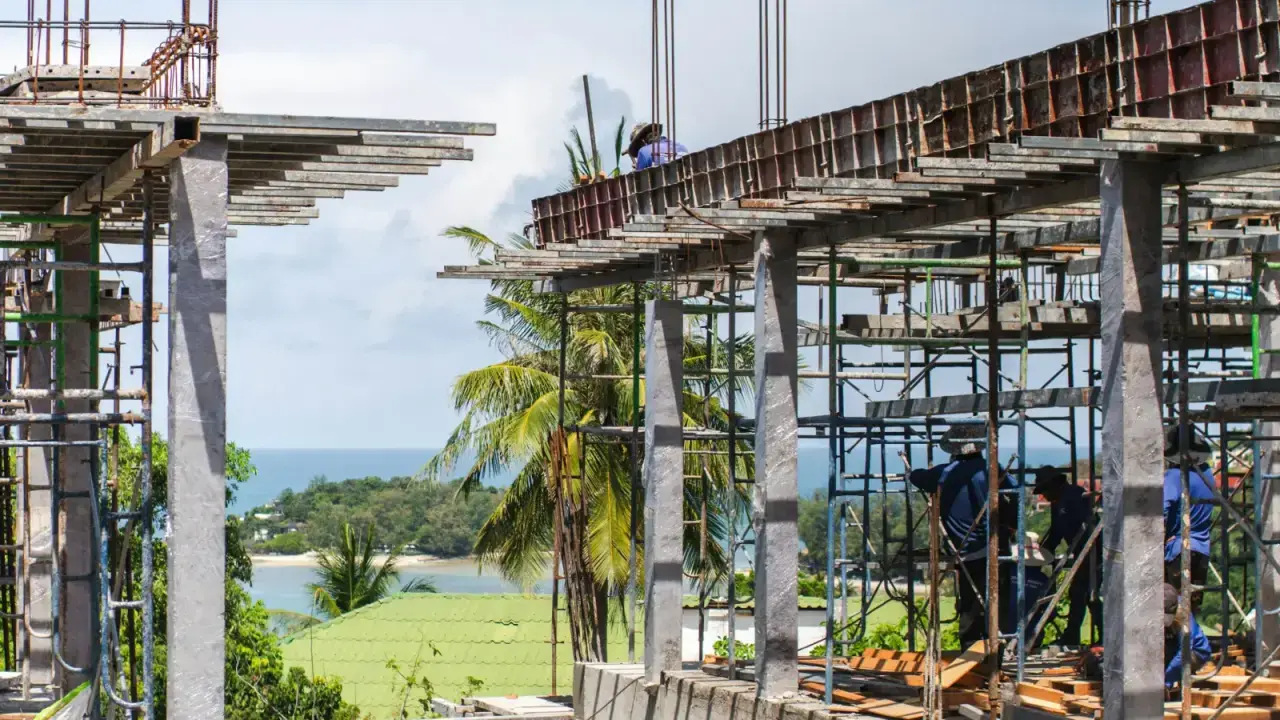
A normal commercial property or homeowners policy is not designed to handle every exposure created by an active construction project. The value of the project grows every week, materials move between suppliers and the site, contractors change, temporary structures appear, and a loss can delay the expected opening date. Builder’s risk coverage is designed around that changing property exposure.
What does builder’s risk insurance cover?
IRMI defines a builder’s risk policy as property insurance for property in the course of construction and notes that there is no single standard form. Policies are frequently written on inland-marine forms and may cover property at the job site as well as materials in transit or at off-site storage locations. The actual policy controls.
Who should be insured?
Construction contracts often determine which party buys the policy and which parties must be protected. The owner, general contractor, subcontractors, lender and others can have financial interests in the project. The named-insured and additional-insured structure should match the construction agreement rather than being decided after a loss.
| Coverage issue | What to check |
|---|---|
| Project property | Building work, materials, fixtures and equipment intended to become part of the project. |
| Off-site storage | Whether materials stored away from the site are included and subject to a sublimit. |
| Transit | Whether materials are covered while being transported to the project. |
| Soft costs | Whether covered physical damage can trigger additional financing, design, permit or project-management expenses. |
| Delay in completion | Whether insured physical damage can trigger lost income or additional expense from a delayed opening. |
| Catastrophe perils | Flood, earthquake, named storm and wind may require separate limits, deductibles or coverage. |
What are soft costs?
Soft costs are project expenses that are not the direct cost of replacing damaged bricks, steel or machinery but can increase because a covered loss delays completion. Examples can include certain additional interest, architectural or engineering expenses, permit costs and other project-specific overhead. Whether they are covered, how they are defined and what waiting periods apply must be confirmed in the policy.
What builder’s risk usually does not replace
Builder’s risk is not a substitute for commercial general liability, workers’ compensation, professional liability, contractors’ equipment coverage, auto insurance or a subcontractor default program. Property coverage and liability coverage answer different questions. A single project can require several policies working together.
Common exclusions and problem areas
Policies can exclude or limit faulty workmanship, defective design, wear and tear, mechanical breakdown, employee theft, water intrusion, flood, earthquake, testing, existing structures and other exposures. Some forms may cover resulting physical damage even when the defective work itself is excluded. Never assume “all risk” means every possible cause of loss is covered.
When does builder’s risk coverage end?
Coverage can end based on policy expiration, project completion, occupancy, the insured’s interest ending, abandonment or other contractual triggers. Problems occur when a building becomes partially occupied before the project team confirms how that affects the policy. The handoff from builder’s risk to permanent property insurance should be planned before occupancy.
Builder’s risk buying checklist
- Match insured parties to the construction contract.
- Use a realistic completed project value.
- Include owner-furnished and contractor-furnished materials where appropriate.
- Review off-site storage and transit limits.
- Evaluate flood, earthquake, wind and named-storm exposure.
- Ask about testing and commissioning coverage for machinery and systems.
- Quantify soft costs and delay-in-completion exposure.
- Confirm protective safeguards such as fencing, hot-work controls and fire protection.
- Plan the coverage transition before occupancy or substantial completion.
Frequently asked questions
Is builder’s risk the same as general liability?
No. Builder’s risk primarily protects covered project property; general liability addresses certain third-party bodily injury and property-damage claims.
Does builder’s risk cover renovations?
It can. Renovation projects may need builder’s risk or renovation-specific property coverage, especially when the value of work is significant.
Does it cover materials in transit?
Some policies do, but limits and geographic conditions can apply. Confirm transit coverage rather than assuming it is included.
Who pays for builder’s risk?
The construction contract commonly allocates that responsibility. The party buying the policy should ensure all required interests are properly addressed.
Sources & further reading
Reviewed October 2, 2026. Builder’s risk forms vary materially by carrier, project and contract; review the actual policy, construction agreement and lender requirements.